
As much as art speaks for itself, it’s important to remember that the way it’s photographed can make or break how it’s perceived, especially in the digital age, where first impressions happen in milliseconds. A grainy, poorly lit photo can flatten textures, distort colours, and undersell the depth of your work. A well-shot image, though? It captures every brushstroke, every nuance of light and shadow, and the very essence of your creative intent.
This is why professional art photography isn’t a luxury—it’s a necessity. Whether you’re showcasing your work online, submitting to galleries, or preparing for an exhibition, the right photographer can translate your art into a compelling visual story.
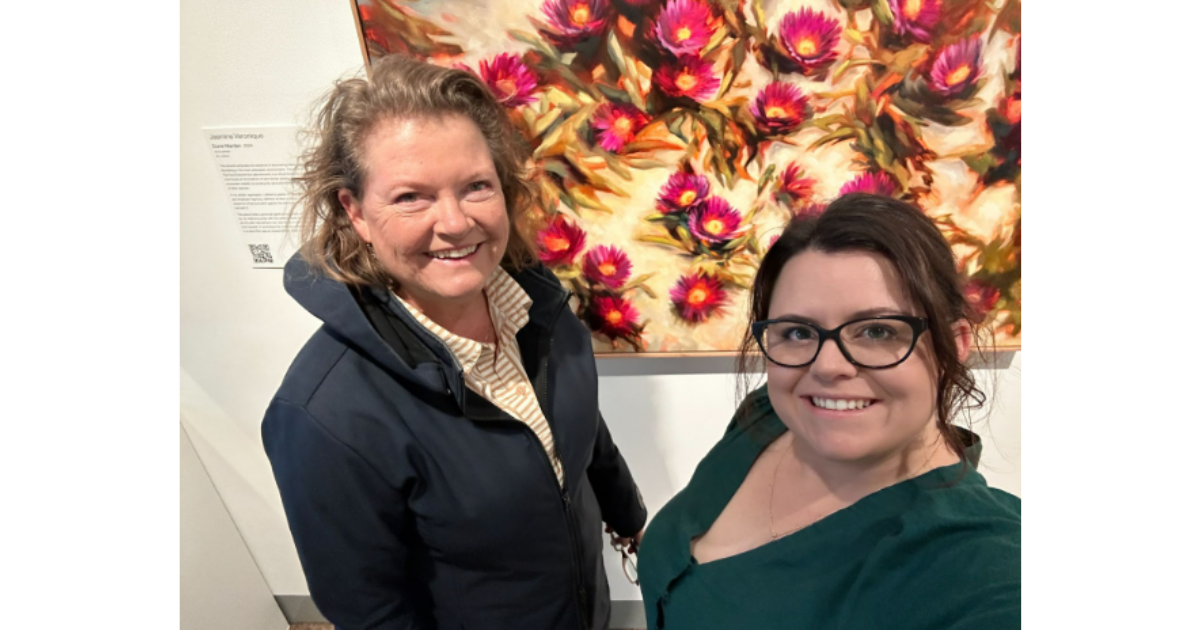
Working with Christine Hall from MyPhotomotion (who appears in the cover photo with me at Caloundra Regional Gallery Local Contemporary Art Prize where we were both finalists) has completely changed how my paintings are seen and understood. She isn’t just behind the camera—she’s an incredibly talented artist who ensures that every image she captures reflects the skill, emotion, and presence behind the work.
If you’ve ever felt like your artwork looks better in person than in photos, you’re absolutely not alone. But there is a solution, and it starts with knowing exactly what to look for in a professional art photographer.
Why you need a professional photographer as an artist
Great art deserves to be seen in its best light—literally. Whether you’re showcasing your work online, submitting to galleries, or documenting an exhibition, professional photography ensures your art is represented with accuracy, impact, and consistency. A strong relationship between an artist and photographer can transform how your work is perceived and elevate your creative brand. Here’s why investing in a skilled photographer is one of the smartest moves you can make as an artist.
Accurate representation – High-quality, true-to-life images are essential for galleries, collectors, and online audiences. A professional photographer ensures your work is captured with precision and colour accuracy
Consistency across platforms – Whether for your website, social media, or marketing, consistent professional imagery creates a cohesive brand that resonates with your audience
Storytelling – Beyond the artwork, people want to connect with the artist. Studio photography and branding imagery offer a glimpse into your creative process and personality, building a deeper connection with your followers
Exhibition documentation – Professional exhibition photography captures your work in a gallery setting and serves as an archival record, invaluable for grants, portfolios, and future opportunities
Time-saving – Outsourcing photography allows you to focus on your art while trusting a skilled professional to handle the technical details
A conversation with Christine Hall from MyPhotomotion
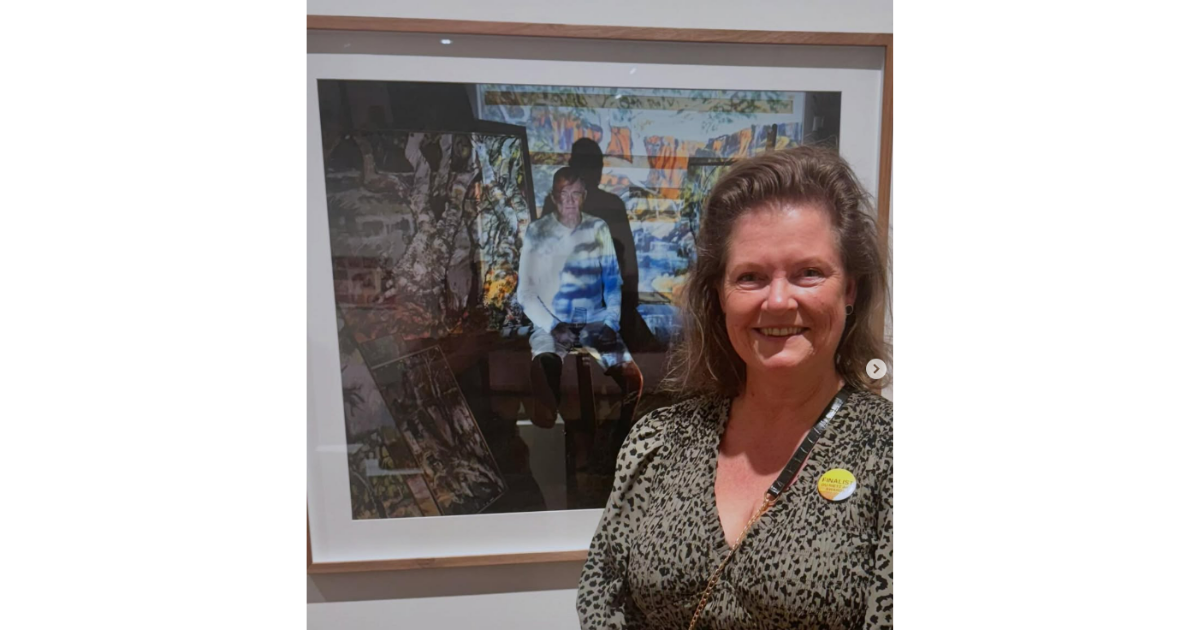
Christine Hall is a professional photographer specialising in artwork photography, branding imagery for artists, and exhibition documentation. Her newly published book, The Studio Project: Profiling Sunshine Coast Artists in their Creative Environment, is a testament to her passion for capturing the stories behind the art. Featuring a stunning collection of studio portraits, this book celebrates the diverse creativity of Sunshine Coast artists and offers an intimate look into their creative spaces.
To explore the importance of the professional artist and photographer relationship, I asked Christine a few questions about her experiences and insights.
Why is it important for an artist to build a relationship with a professional photographer?
"My artists become my tight-knit family community, and I try to go the extra mile to foster the relationship," says Christine. Keeping up to speed with the latest photography and art trends ensures she can provide the best possible service. "It makes sure your images are uniformly processed every time to your brand mantra."
What common mistakes do artists make when photographing their own work, and how can a professional photographer help overcome these?
"Using an iPhone or a JPG on a camera. Neither of these can capture the whole colour palette as both these decide for you what shade of the colour rather than what is actually there," Christine explains.
Instead of trying to do everything themselves, artists should "use their talents where they lie—be the best artist, not just okay at everything." A professional photographer ensures the highest quality images by shooting in RAW, preserving all details and colours. "Professionals keep the highest quality size to have for future printing as we shoot in RAW, not in JPG, and then supply the JPG once processed."
She also highlights the importance of long-term access to original files. "We are obligated to hold the original file size for seven years (original RAW) and the largest size processed."
How does professional photography enhance an artist’s ability to connect with their audience?
"We show your work in its most authentic self," says Christine. "We showcase you at your best—every little stroke, depth, and shade." The goal is to create a connection between the audience and the work, making it instantly recognisable. "The artist wants people to see something and say, ‘Oh, that’s Jasmine’s work.’"
Can you share a memorable experience working with an artist and how the collaboration impacted their career or practice?
"A number of my artists have gone on to win a major art prize or become a finalist because their images showcased their work accurately and professionally in the selection process and then on to the judging process," Christine shares. High-quality photography plays a crucial role in how artwork is perceived and assessed.
What inspired you to create The Studio Project, and what has been the response from the artistic community?
"Working closely with artists in their own studios. Seeing the actual work process and then what transpired as a result floors me most of the time," Christine says. "I wanted to share that with the broader community and art lovers."
The response has been overwhelmingly positive. "Both artists and art lovers have given such positive feedback. The art lovers feel like they have rubbed shoulders with the artists, and non-art lovers have gained a new appreciation for the art process."
One of the standout features of the book has been the inclusion of artist audio recordings. "The audio of artists in the book has been a huge winner." Christine also notes that "all the artists maintain it was a valuable experience for them, enjoyable, and a tool they can use to promote themselves."
For artists just starting out, what advice would you give about prioritising professional photography in their careers?
"Back yourself," Christine says. "You want to be taken seriously as an artist, show yourself at your best, and reap the rewards."
She points out that "galleries and prizes follow your progress and look for new talent and their improvement." Investing in high-quality photography early on can make a big difference. "Plant the seed to start your journey and seek feedback, even if you don’t use it."
How do you approach photographing artwork to ensure true-to-life colour and detail?
Christine prefers to shoot in her studio under controlled lighting conditions. "I like to photograph in my studio in the correct lighting conditions and then use the art piece beside me when I’m at the computer to colour correct to my EIZO screen to match visually." This ensures that the final image remains as true to the original artwork as possible.
What are your plans for 2025, and what are you looking forward to the most?
"Starting off my year with a bang. I’m delivering a portrait workshop for Cooroy Butter Factory and curating an exhibition from the results," Christine shares.
After that, she has a major personal adventure lined up. "Followed by looking forward to a month trip away to Antarctica for a long breath and inspirational recharge."
Beyond that, her focus remains on supporting artists and galleries. "Continue to support my artists and galleries as well as my passion for studio portraits."
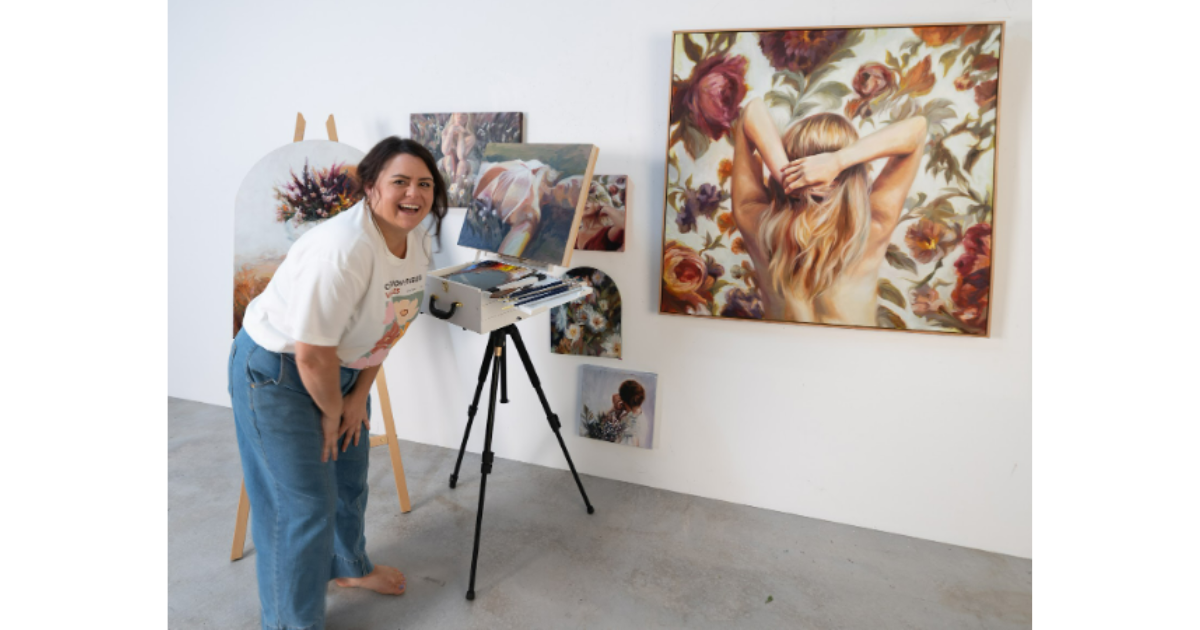
My artwork setup in Christine’s photographic studio
Final thoughts on the artist and photographer relationship
The relationship between an artist and their photographer is more than just a service—it’s a collaboration that shapes how your work is experienced beyond the studio. A skilled photographer doesn’t just document; they enhance, translate, and elevate your art for the world to see. Working with someone like Christine Hall from MyPhotomotion ensures your creative vision is captured with the same care and precision you put into your work.
To see Christine’s incredible photography or to work with her, visit MyPhotoMotion and follow her on Instagram. Oh, and make sure you check out her latest book, The Studio Project!
By the way, I offer commissioned artworks where I work closely with you to incorporate your vision into the art. By limiting my commissions to a select few each year, I ensure each piece is crafted with the utmost care, giving my clients a truly unique work of art that’s deeply meaningful to them.
I’d like to invite you to download my available artwork price list and view my signature floral painting collection and recent Figures and Florals collection. Please feel free to contact me with any questions. Additionally, be sure to stay updated on my blog, where I’ll be publishing plenty of tips, tricks, and resources that you may find interesting - just like this deep dive into the artist and photographer relationship.
