
There’s something about Australian wildflowers that stops you in your tracks. They’re raw. Resilient. And somehow, still delicate.
In recent years, Australian wildflower art has been growing in popularity—not just in galleries, but in homes, studios, and public spaces. What once belonged mainly to botanical studies and field guides is now making its way onto canvases in a more expressive, emotional form. And people are connecting with it, deeply.
It’s not just about the flowers themselves. It’s about what they represent.
Be sure to keep reading ‘til the end for an exclusive sneak peek!
What is Australian art known for?
Australian art is often known for its strong connection to land, identity, and environment. From ancient Aboriginal art through to contemporary painters, there’s a deep emphasis on storytelling, place, and natural beauty. You’ll find bold landscapes, earthy tones, and native flora woven into all kinds of mediums.
Australian wildflower art fits right into this tradition. It honours the natural world while allowing room for personal interpretation. It’s not about perfection. It’s about presence.
Why are flowers important in art?
Flowers in art have always stood in for something more. They're a symbol, a feeling, a moment. In classical art, they were used to show beauty, femininity, or even grief and impermanence. But flowers are more than decoration. They offer softness, contrast, and emotion—especially when paired with bolder forms or natural textures.
In Australian wildflower art, they also carry a strong sense of place. You’re not just looking at a pretty bloom. You’re seeing where it came from, what it survives through, and how it connects to local culture and land.
Why are flowers so meaningful?
We give flowers at almost every emotional moment in life—births, celebrations, losses, love. So it makes sense that flowers in art feel powerful too. They're familiar, but still full of surprise.
Native Australian wildflowers bring even more meaning. Many are seasonal, elusive, and hard to cultivate—making them feel special, even rare. When captured in paint, they carry that same fleeting beauty, frozen in time.
What is the cultural importance of flowers?
Across cultures, flowers have held deep symbolic meaning. In Australia, that includes both Western traditions and Aboriginal knowledge systems.
For First Nations peoples, many native flowers are tied to Country, ceremony, medicine, and knowledge. Their presence in art can honour this connection, or invite people to pay closer attention to the land they live on.
Contemporary Australian wildflower art often blends this cultural significance with personal storytelling. It's a space where memory, identity, and environment meet.
What do Australian native flowers symbolise?
Native flowers symbolise strength, adaptability, and quiet resilience. Many bloom in poor soil or after fire. Others flower only for a short time, then disappear for the year. They speak to survival and change—making them powerful symbols in both personal and cultural contexts.
In art, this gives them emotional weight. A wildflower can represent growth, healing, fragility, or strength. It depends on the artist, the viewer, and the story being told.
Are wildflowers native to Australia?
Many wildflowers are native to Australia, yes. In fact, Australia is home to over 24,000 species of native plants, including a wide range of wildflowers found nowhere else in the world.
When we talk about Australian wildflower art, we’re often referring to these unique natives. Think fringe lilies, banksias, boronias, orchids, and the iconic kangaroo paw. These aren't garden centre varieties. They're the flowers that grow naturally in our bushland, dunes, forests, and mountains.
What is special about wildflowers?
Wildflowers are special because they tend to grow where nothing else will. They’re hardy but beautiful, often tiny but eye-catching. Some only appear after fire or rain. Others bloom for just a few days each year.
They represent nature’s spontaneity and survival instincts. That’s why so many artists are drawn to them—they’re not just botanicals. They’re metaphors.
Australian wildflower art captures this perfectly. It’s not about grand arrangements. It’s about noticing the small things and giving them the space they deserve.
What is the most famous flower in Australia?
The golden wattle is Australia’s national flower and probably the most recognisable. It symbolises unity, resilience, and celebration. You’ll often see it referenced in art and design as a nod to Australian identity.
But it’s not the only one artists love. Christmas bells, waratahs, and flowering gums are also prominently featured in Australian wildflower art. Many regional wildflowers—like the Mulla Mulla or Sturt’s Desert Pea—carry strong local significance too.
The beauty of Australian wildflower art
Australian wildflower art isn’t just a trend. It’s a response to land, to change, to emotion. It gives us a way to connect to the bush without needing to leave home. It invites us to slow down and pay attention to what’s quietly blooming around us.
If you’d like to explore more, my current body of work is a heartfelt tribute to this exact idea.
My first solo exhibition, The Dance of the Wildflowers, runs from 15 May to 15 June 2025 at Butter Factory Arts Centre in Cooroy, QLD. You can preview the collection below or download the full catalogue today.
Sneak preview: The Dance of the Wildflowers
Each piece in this series has been shaped by time spent walking, observing, and quietly learning from the wildflowers that grow across the Sunshine Coast region. From delicate orchids to tough little blooms pushing up through sandy soil, these works reflect not just what I saw, but what I felt while creating them.
This Australian wildflower art collection isn’t about polished perfection. It’s about presence. Movement. The strength of fragility. Below, you’ll find a selection of works from the exhibition, each with its own story.
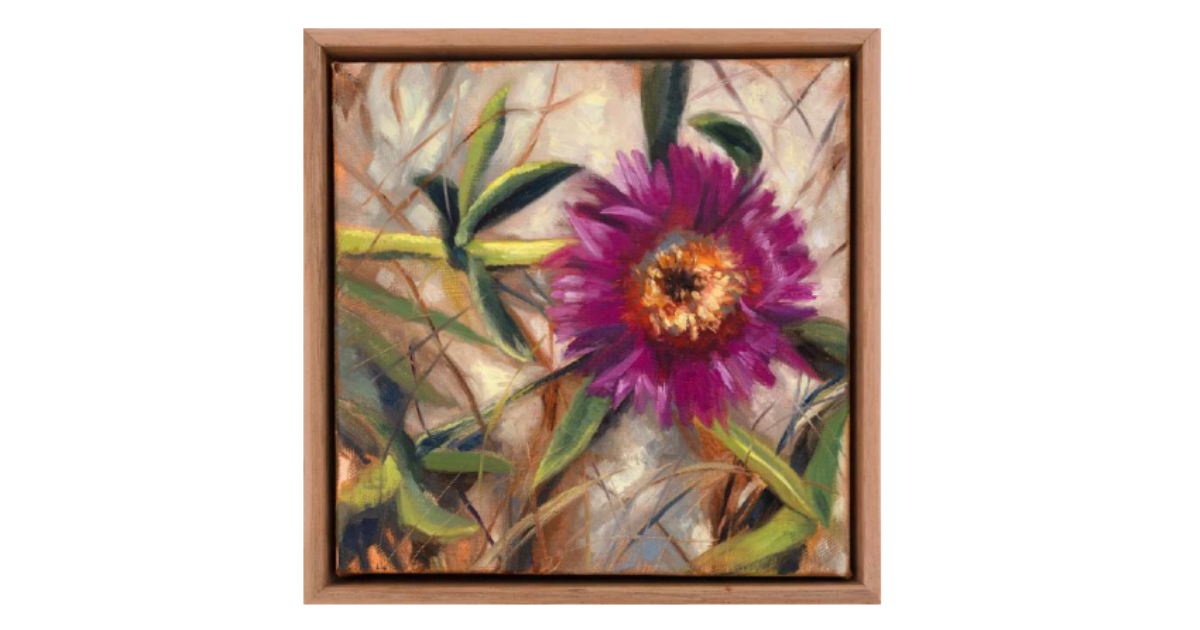
Made for This
This piece is small but strong. A single burst of colour holding its own in a tangle of foliage, capturing the feeling of walking past a lone wildflower pushing through dry coastal scrub—it feels fierce and delicate all at once. This is the kind of piece that holds space quietly in a room. Proof that even small things can demand attention.
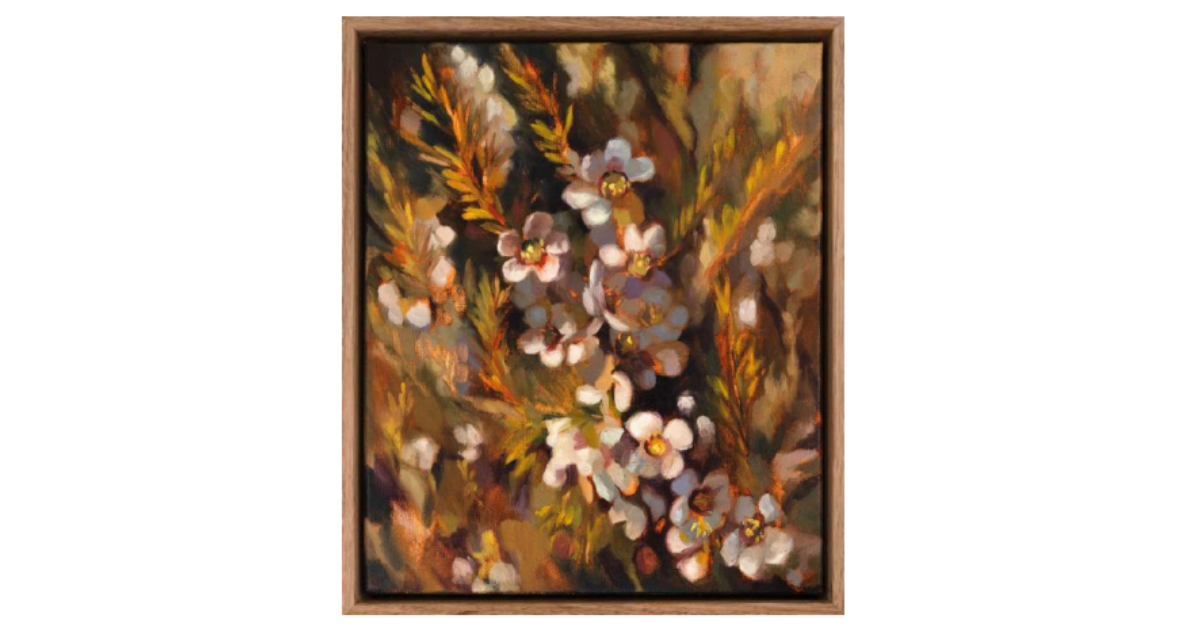
Second Nature
There’s a warmth to the way these soft blooms catch the light and blend into each other—no hard lines, just movement and softness. This painting brings that same feeling into the home. It's a gentle, glowing presence that fits beautifully in any space needing a little lift. A subtle reminder of how Australian wildflower art can bring comfort without being quiet.
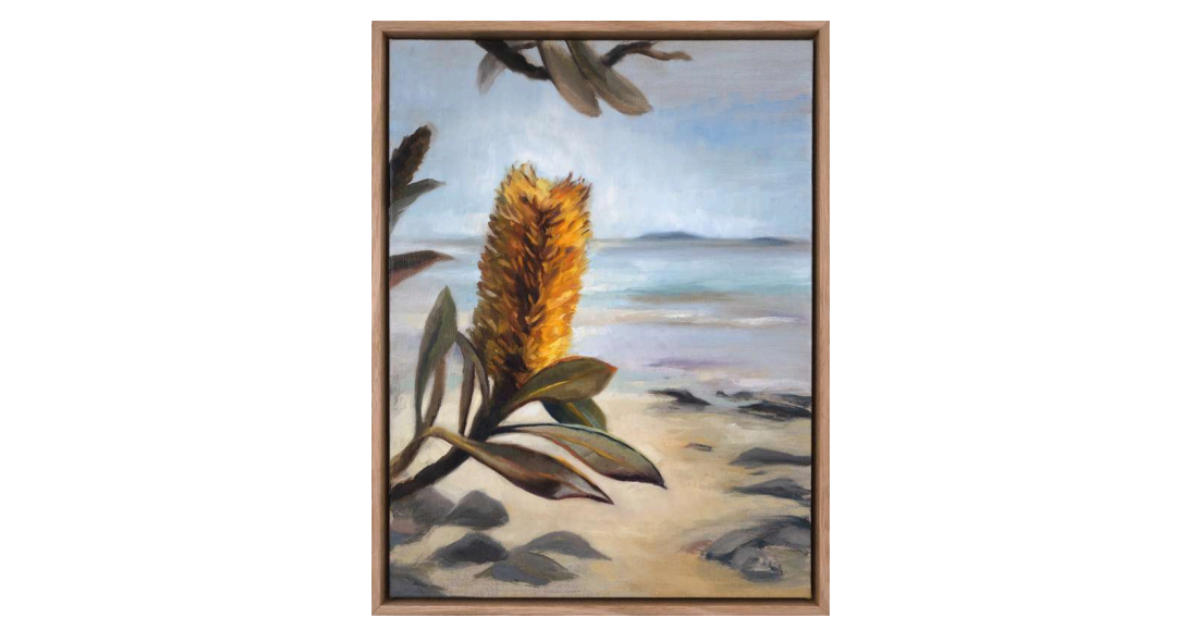
Beyond Peaceful
The contrast between the wild textures of the banksia and the softness of the distant shore will stick with you. This is a grounding piece. One that gives a sense of openness and calm. Perfect for hallways, studies, or any space where you want to pause and breathe.
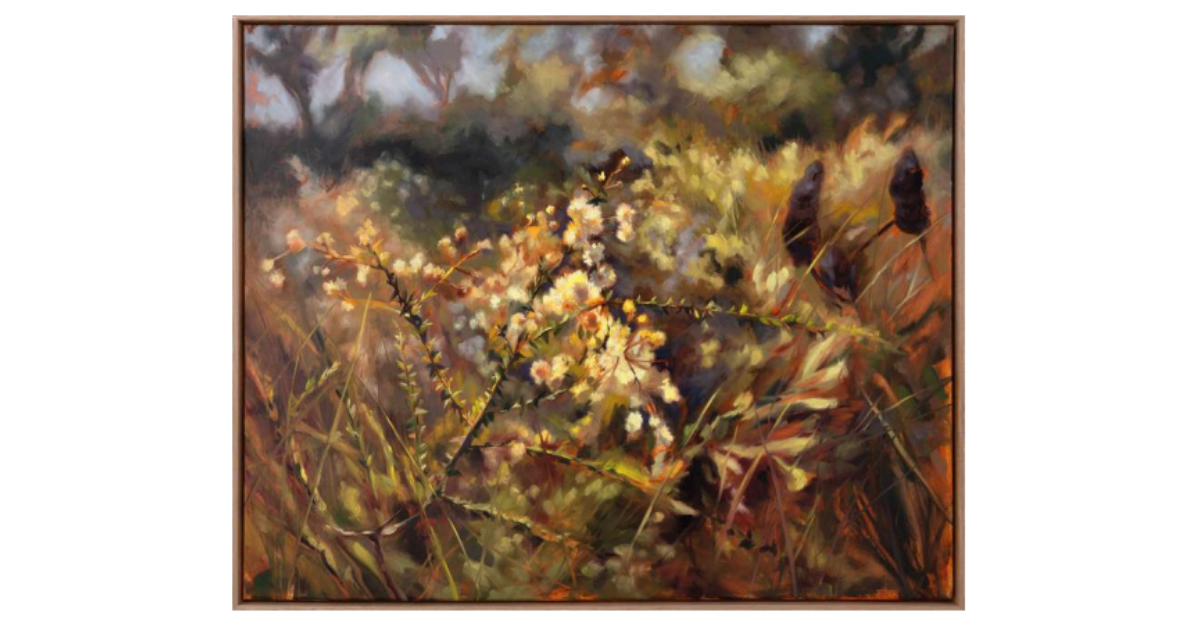
There’s a Place
This painting captures a moment where the light hits just right, lighting up a thick patch of scrub with gold. It’s full of texture and energy, but still holds a softness that makes it work beautifully in a home. One of those pieces that changes depending on how you feel when you look at it. It’s what Australian wildflower art does best—it captures movement, stillness, and emotion in one frame.
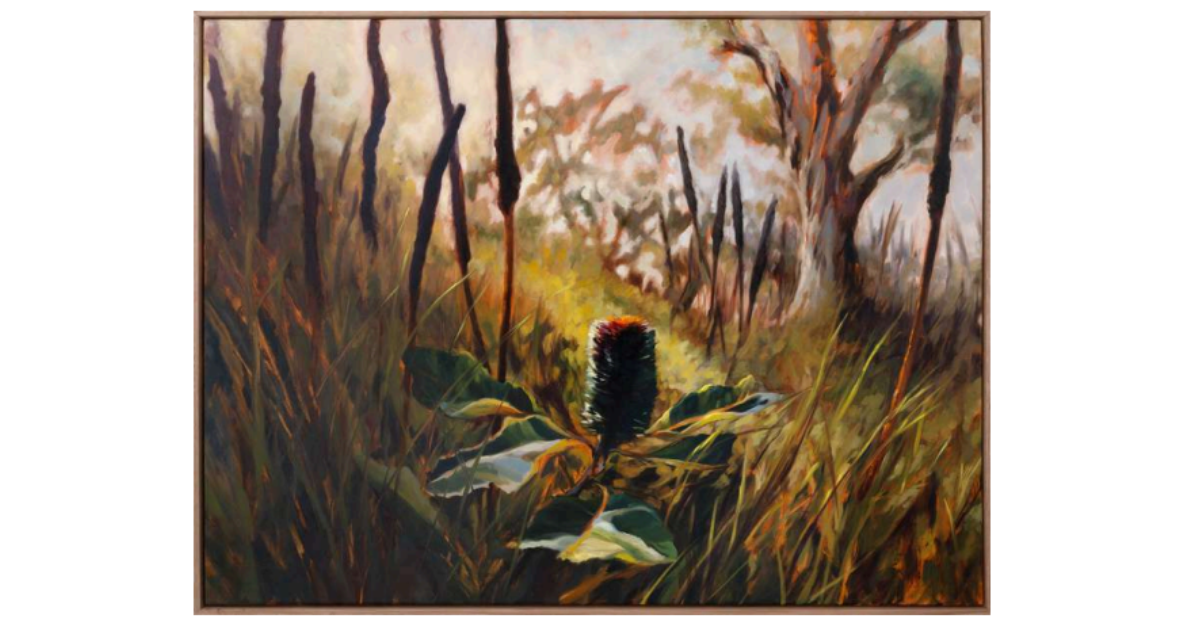
Passage
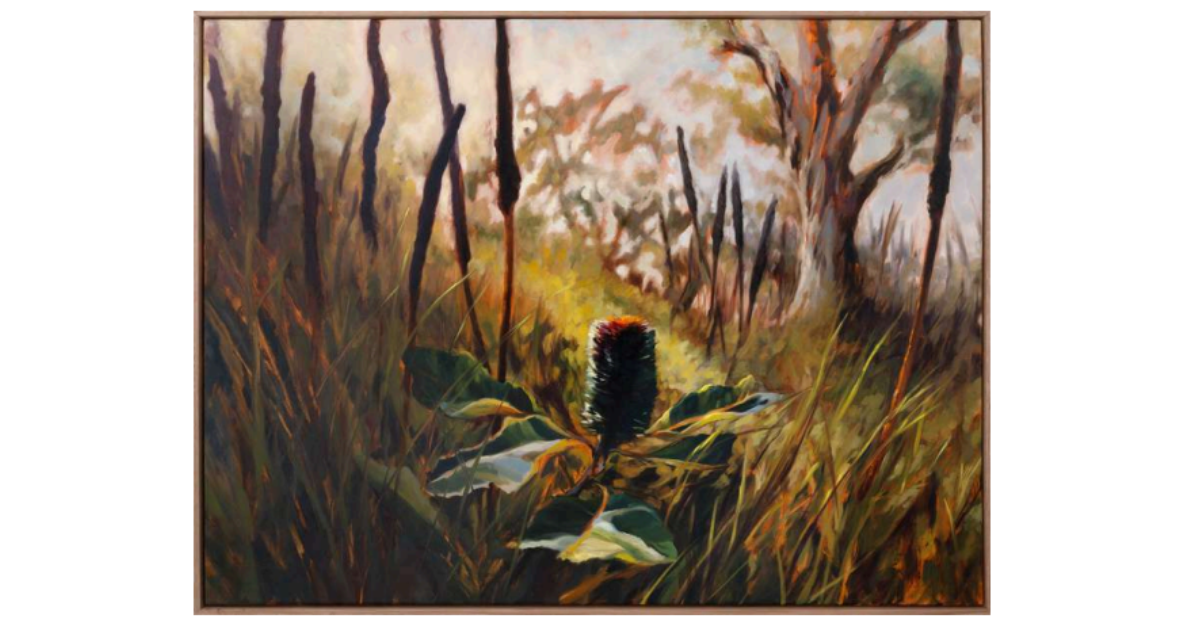
This is one of the larger pieces in the collection. The banksia sits at the centre, almost glowing, surrounded by sharp grasses and dark trunks. It speaks to survival and grace. This work makes a strong statement in any room, especially for those who want their art to hold meaning, not just space.
Whether you’re new to Australian wildflower art or already feel connected to our native flora, I hope these pieces give you a sense of what this collection holds. There are many more works still to see—each one a different response to the wild.
To explore the full collection, download the exhibition catalogue or come and see the works in person during The Dance of the Wildflowers at the Butter Factory Arts Centre.
